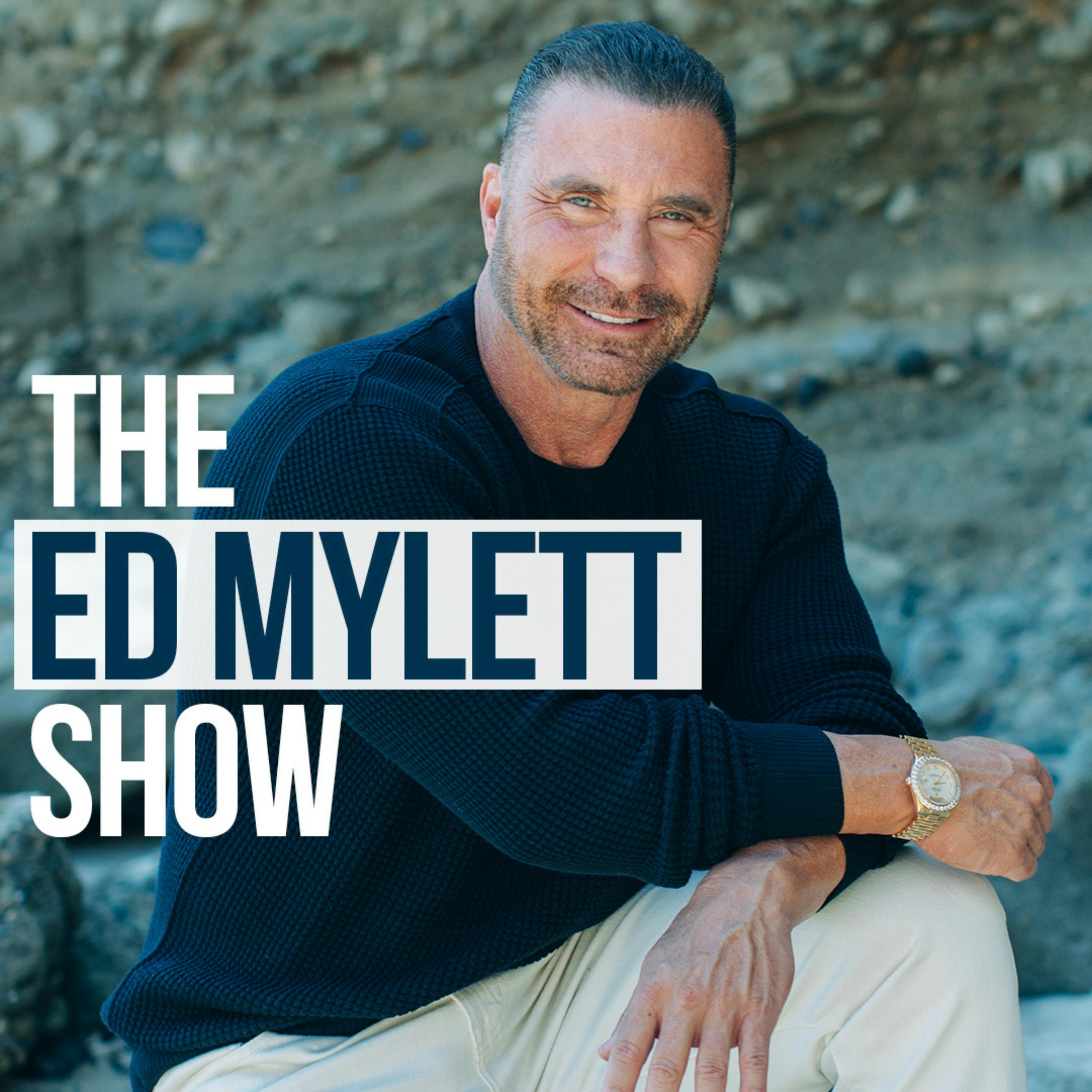
Join Ben Newman, highly regarded Performance Coach, International Keynote Speaker and 2x WSJ Best-Seller, as he takes you into the minds of some of the highest performers in sports and business to tell their full story. The "Burn" is something we all have, but rarely do people uncover and connect to it. Ben helps people from all walks of life reach their true maximum potential.
Ben has worked with coaches and players from the last 6 Super Bowl Champion teams and currently serves as the Performance Coach for the Big 12 Champion Kansas State football team in his 9th season (3 National Championships at North Dakota State) with Head Coach Chris Klieman. Ben served 5 years as the Mental Conditioning Coach for the 18x National Champion Alabama Crimson Tide football team. Lastly, Ben also has served at his alma mater as a Performance Coach for Michigan State University’s football and basketball programs.
For the last two decades, Ben has been serving as the Peak Performance Coach for the top 1% of financial advisors globally and for Fortune 500 business executives.
Ben’s clients have included: Microsoft, United States Army, Anheuser-Busch InBev, Quicken Loans, MARS Snackfoods, AstraZeneca, Northwestern Mutual, AFA Singapore, Mass Financial Group, Frontier Companies, Wells Fargo Advisors, Great West Life Canada, Boston Medical Center, Boys & Girls Club of America, New York Life as well as thousands of executives, entrepreneurs, athletes and sales teams from around the globe.
Millions of people and some of the top performers in the world have been empowered by Ben through his books, educational content, coaching programs, podcast, and live events.
The Hustle, Discipline and Sacrifice Behind Greatness | Daymond John
•Ben Newman•Season 8•Episode 43
Use Left/Right to seek, Home/End to jump to start or end. Hold shift to jump forward or backward.
0:00
|
24:58
What does it REALLY take to build something extraordinary when the odds are stacked against YOU?
In this special throwback episode of The Burn Podcast, Ben Newman sits down with legendary entrepreneur, branding expert, and Shark Tank investor Daymond John for a powerful conversation about resilience, discipline, entrepreneurship, and the relentless pursuit of greatness.
Long before the success, recognition, and global influence, Daymond was a young entrepreneur from Queens, New York, with a vision and a willingness to do whatever it took to bring that vision to life.
Raised by a single mother, Daymond learned early that opportunities aren't always handed to YOU. Sometimes, YOU have to create them.
From selling homemade hats on the streets to building FUBU into a global fashion brand with just $40 in starting capital, Daymond shares how the smallest beginnings can lead to extraordinary results when combined with persistence, creativity, and the courage to keep moving forward.
Ben and Daymond dive into the experiences that shaped his Burn, including the lessons he learned from his first $800 in sales, the importance of adapting when things don't go according to plan, and why putting ego aside is essential to continued growth.
But this conversation goes far beyond building a successful business.
Daymond opens up about fatherhood, the legacy he wants to leave behind, and why true success requires more than financial achievement. It's about staying hungry to learn, surrounding yourself with the right people, and using every challenge as an opportunity to become better.
Because success doesn't happen simply because YOU have a great idea.
It happens when YOU are willing to take action, solve problems, embrace adversity, and consistently do the work that others aren't willing to do.
Whether YOU are an entrepreneur, leader, athlete, or someone chasing a dream that feels out of reach, this conversation will challenge YOU to stop allowing YOUR circumstances to define what's possible.
YOU don't need the perfect opportunity to begin. YOU need the courage to start, the discipline to continue, and the determination to finish what YOU started.
************************************
Connect with Daymond John: Instagram: https://www.instagram.com/thesharkdaymond/ Facebook: https://www.facebook.com/TheSharkDaymond Website: https://daymondjohn.com/
Daymond John Books: https://www.bing.com/shop?q=daymond%20john%20books&FORM=SRRT01&cvid=d851193c6f0a400ba2690f2cb53ac484&originIGUID=5CB58308725A4AE183ABFFEAEE3B0ECD
************************************
Watch the full episode on YouTube: https://youtu.be/dQJr1uQlTYg Listen on all platforms: https://www.theburnpodcast.com
************************************
Learn about upcoming events and coaching: https://www.workwithbnc.com Get Ben’s latest book The STANDARD: https://amzn.to/3DE1clY1st Work directly with Ben: https://www.bennewmancoaching.com
Connect with Ben Newman: Instagram: https://www.instagram.com/continuedfight Facebook: https://www.facebook.com/Continuedfight/ Twitter: https://twitter.com/ContinuedFight LinkedIn: https://www.linkedin.com/in/ben-newman-b0b693
Welcome back to another episode of The Burn. I am Ben Newman, and you know how we do this every single week. We're gonna bring you a story of an athlete, an entertainer, a celebrity, somebody from the business world who has helped us understand that why and purpose is not enough. It's the underlying burn that ignites your why and purpose and causes you to show up on the days you don't feel like it, and especially after you win. Today is very exciting for me as I have an opportunity to bring somebody onto the burn that I would have loved to have had onto the burn going back to year one, but it always happens at the right time. And today we're gonna have the opportunity to hear from Damon John. And there's a couple of things that I love. I know I don't do a lot on the backgrounds and bios, but when somebody's got a background in bio like this, we want to make sure that we hit it. And from being a best-selling author to one of the most sought-after speakers in the world today, to being my favorite. And I'm not just I'm not just saying that, but our family loves watching Shark Tank. He's our favorite to watch on Shark Tank to the tens of businesses that he's invested in. His story is amazing. He is amazing. One thing I want to share because it's a connection that uh that he and I have, and I think it may come out in his burn, is growing up in a house with a single mom. Now, our stories are going to be different. He's gonna share his, but for me, having that mom who passed away from amyloid doses far too soon, mom and dad being divorced at six months old. My mom only getting to live until 38 gave me that burn. Me being 46, those eight extra years she never got. And there's something about a mom, there's something about the way she leads in the home, there's something about the lesson she can teach us about life. She still inspires me to this day, even though she's been gone far too soon. And so I'm excited, Damon John, to welcome you to The Burn. I know, born and raised in Queens, New York, one hell of a story. Welcome to The Burn.
SPEAKER_00
Well, thank you. That's a really amazing and very humbling intro. And I appreciate it. And uh and I'm I'm just happy to be here. Thank you, brother.
SPEAKER_01
Absolutely. And uh I so I here's where I really want to start because it it's such a unique thing. What is really when you hear the burn or that deeper than why and purpose, where does that take you when you think of your story and your success and how you got started?
yeah, I think when I hear that the concept of the burn, it is pushing through, you know, you know, you can either say the burn of burning energy, the burn of that muscle, or fighting through the burn, right? The fire running through it to me, you know. Uh uh, they you know, I I like I like to say the there's an old saying the burn and in in and is you know, is it's it shines more inside of me than it is externally uh that I gotta fight through. So it's just uh the constant knowing that uh no matter where you are in life, you have to have a driving force and a burn to break through things to me. Or there's nothing else to live for, to be very honest. I don't care if the burn is in my family and my faith, uh, you know, in business, it's uh, you know, righting the wrongs that are out there or fighting for those who can't fight for themselves. I think the burn is it's a drive that just you gotta tap into.
SPEAKER_01
And so how much of that drive early on uh was there a similar drive that came from from your mom growing up? Is it uh was it something that was even deeper and different? Where did that come from, really at its earliest ages?
SPEAKER_00
Yeah, well, you know, I I think as you touched on, you know, we were both raised by single mothers, and I think that, and I always say that there's entrepreneurship uh cannot uh at all compare to being a single mother. Um and I think that it was the drive to see her fight for me, uh, fight for us as a family, uh, you know, fight for herself. Uh, you know, um, it it purely came from her. Uh, you know, I see her come home and work in one job and then she goes to another job. And after she finished that job, she comes home and tries to open a business. And, you know, at home, when the business is not working, she's writing down on all these pads and pens and papers on what else can she do? You know, it's it's it's it's not accepting what you know we were given. It was just there's gotta be a better way, and I and it's up to me to figure it out.
SPEAKER_01
One of the one of the things I love about your story when you think about figuring it out, uh, and and you you've got me beat because I remember my first job, 13 years old, selling hot dogs for $3.25 an hour. And I think your first job was $2 an hour. So you had to find it out. What were you doing for $2 an hour? And then little side note, I don't even think you you could get anybody to work for the types of dollars that we were working for back in the day. People always want so much more rather than just doing what it takes.
SPEAKER_00
You know, I don't even know if they had working papers.
I think they had something called working papers at that time, but uh, you know, 10 10 at 10 years old, uh $2.25 handing out flyers on corners. Uh, and then I actually I it was odd, I was just thinking about because I've had so many jobs as a kid. Um, I was actually an apprentice electrician. Uh, I wouldn't even call it an apprentice, I was a kid helping an electrician, and I was wiring BX cable in in um burned down buildings in the Bronx. So there's a couple of buildings in the Bronx right now that I just want you to know were wired by a 12-year-old. Uh just so you know.
SPEAKER_01
Uh incredible that that's where you start. And similar, uh, Fubu, which everybody knows Fubu, and incredible what you've done, the brand that that you built. But the story says that you started Fubu with $40. Take us back to take us back to that.
SPEAKER_00
Yeah. So, you know, that that the the place I was handing out the flyers for when I was 10 years old was a a mall called the Coliseum Mall that was just opening in my neighborhood. Not a big mall, like a flea market. Um, fast forward uh to 10 years later, 1989, Good Friday, 3 o'clock in the afternoon, 3.15 in the afternoon. I would make a bunch of hats the night before at home on a sewing machine, but these hats uh look like uh a ski cap, but with a tie on the top, right? Uh and I bought that with $40 worth of fabric and I made them because I knew, you know, African Americans, we love to party on Easter after we go to church. It's party time. Everybody wanted to look fresh. I stood on that same exact corner that I would hand out flyers and I would hand out those hats 10 years uh almost to the date. Um, and I would I would sell $800 worth of hats in one hour. Uh, and it was that moment of my life that the light bulb went off. Because before that, I had always had some kind of a job or something else, but I was working for somebody else, in some sense. But this time, it was my ability to actually manufacture it myself and uh and and then create this ability to convey why there was value to somebody to buy the hat. It wasn't the same pitch to everybody. One pitch was keep your head warm, the next one, you look like DLSO, the next one you're fashion for, the next one is seek yourself after a hard week of work. Um, and I understood at that point, in that one moment, I understood manufacturing, the value of it, uh controlling it. I understood the ability to sell, and I understood the ability to get out there and risk it all. At that one moment, kind of all these things that I saw my mother do or heard or whatever, it culminated at that one time.
SPEAKER_01
It's it's incredible. Let me let so you have that feeling, you learn to read different people. It sounds like there were so many life lessons. What was the vision back then? When did you start to cast a vision? You're like, hey, I'm onto something, I got some role in here. What was the vision like? What are the things you would think about back then?
know, I think about uh most entrepreneurs that are successful, they wake up a little bit at this vision. And the vision is how can I be of a better service today than I was yesterday for my customer? Uh they wake up with what's keeping my customer up at night and how can I improve my value or my the what I'm giving the customer. The vision then was to make more hats the next day, and after that it was, you know, uh create a hat and t-shirt. Then it was maybe have a store that I can own my own store. And then it was well, distribute to more and go so on and so on and so on. But the vision purely was to overprovide and make a better hat for another day for another customer.
SPEAKER_01
So my my wife, we uh who also a uh a fan, as I told you, I'm telling you, we watch it almost every night. Like it's easy to I love it, man. It hey, it is either literally in our house sports because we're watching athletes that I work with, who it's a blessing to work with them and watch them compete on TV, or we literally like shark tankers where I go to just get me in chill mode and I can just relax and get away. Like we, I mean, for years and years and years. Amy's like, you gotta ask Damon, how did you know what to do? I mean, what was it? Mentors, was it was like so? How did you because some people they say $40 to selling this company for hundreds of millions? Like, how did he even know what to do? And so Amy said, You better.
SPEAKER_00
Amy, I didn't. It's the same as raising, you know, you have kids, right? Oh, yeah, too. All right, well, you know, what book showed you what to do? You figured it out, man. Like Amy, I'll you know, you know, so I like to tell people that I am wrong, fail, or lose 80% of the time or more. But that 80% of the time, you got to think that's a that's that's a thousand attempts. But the 20, beginning even 20, the five percent of times that I have been right has been Fubu, Shar Tank, my faith, my you know, my marriage, you know, uh, you know, fighting and making the right decision over cancer or you know, stopping stopping alcohol. You know, the the times that I've been right. So it was always on that corner that I sold those hats. I mean, I'm sure the first five people to walk by, I was like, $30. They were like, go screw yourself. Oh $20. Get the hell out of here. $10. Uh I'm interested. Okay. Um, you know, and you know, it's just purely figuring out. You know, I think that I think that how did I know what to do at the end of the day? It becomes not having an ego is what to do, and then acting and learning and then repeating it and figuring out what works. There's a lot of, there's a lot of there's a lot of education you have to do. Do I like selling these hacks? Am I ready to go and do this? You know, uh, so it's always analyzing and figuring it out, uh, and and and and and knowing you need the information. I'm constantly educating myself.
So I I've got a I'm looking on your sweatshirt, and there's a word on that sweatshirt that has always meant so much to me. And I'm thinking about the intention word. And I'm thinking about the fact that you and I, and I'm very excited, are going to share the stage for a mastermind that Success Magazine has never done in August. And I look forward to that in in LA, be able to spend time in person. And, you know, they selected people whose stories resonated with readers who have been featured in the magazine to now get to go spend time live. And they've never done it. I look forward to it. And one of the things that I think about in our coaching work that we highlighted uh in the article that comes out for us in June is I believe there's a difference between focus and what I've always taught, which is intentional focus. And so when I look at that intention on your sweatshirt, how much intention was there in your thought? Because I think a lot of times people think, oh, I'm focused, I'm gonna go grind today. And it's like you can't just have focus and grind. You have to have intention to know what you're going to do when you face challenge and adversity. Because some of the numbers you just shared, people are gonna say, wait a second, I gotta lose a thousand times to win five. Like, Damon, you don't understand. Like, how do you do that? So, how important has intentional focus, like great intention, staying the course, resilience, how important has that been for you?
SPEAKER_00
Well, you you you're you ask a very uh first of all, thank you for asking the question I've never been asked before. But the basic way to do to talk about intention is I like the way that Jeff Bezos says you got to be very, very clear on the outcome of what you want to achieve, but you have no idea how you're gonna get there, and you're going to know that a path to getting there is going to be 400 roads that have dead ends, but then that 400 and first road doesn't. But the intention at the end of the day is this is what I'm gonna create. I'm going to create now. Did I say to myself, I'm gonna create a global brand? No, not at all. What was the intention? I'm gonna make other, I'm going to make people feel proud about what they're wearing, and whether this was before social media existed or the internet or cell phone, but whether somebody's walking across the street, they're gonna know that that person loves hip hop. That person uh, you know, identifies with this new genre of music that is so empowering. And I am going to, my intention is I'm gonna create the uniform for people. So when I create something, they're gonna maybe interpret it differently, but we are going to be part of a culturally relevant something that we are no longer dependent on other people making clothes for us and telling us we have to reinterpret it for the streets. We are gonna do this, it's for us, by us, maybe. And that was the that was the overall intention. Now, how am I gonna start that? What hats, with shirts, or pants? I don't know. I started off with 10 color t-shirts because I'm like every designer. What? I want to have this big breath. Wait a minute, Damon. 65% of uh all clothes that people wear are black, another 20% are white. Wait a minute, you don't need 10 colors, you need only three: red, black, and white. Wait a minute. Oh, uh look at all these logos. Oh, they're only buying the FB and the O5. Okay, well, I I'm gonna create, oh no, they're only buying the t-shirt. You start your intention starts to home in. You go, okay, what can I do with the best of that? Because I'm starting to make headway in this area. I'm not gonna allow my ego to say to me, Well, Damon, don't close that area because other people are gonna laugh at you and don't worry about that. No, the intention is to get somebody to wear it, and I'm I love these people who are wearing it and supporting. Well, they're not wearing it the way that you designed it. I don't give a shit how they're wearing it, they're wearing it, and they're supporting, and you know what? I never even thought about it being worn like that. Wait a minute, let's make more of those. The intention keeps going back to what the end goal is, and I and and and I and I've done that all my entire life, uh, because I read the great book by Napoleon Hill, Thinking Grow Rich at the age of 16. And I have read it 23 times till today because I'm dyslexic, like eight of the other 12 sharks. And I read the same exact goals every night before I go to bed and every morning when I wake up, and I read 10 goals. Six of them expire in six months, the other four expire in two years, five years, 10 years, and 20 years. And I never hit those six-month goals because I set them so big. So I'm gonna do this amount of business. When I do this amount, I reset it. But that intention keeps staying in. It keeps me back on course to what my what my drive is and what what I and what I want to what I want to accomplish.
SPEAKER_01
You got me so fired up right now. It's got me thinking, I learned an amazing lesson from my five years with Coach Saban at Alabama and my 11 years I've had with Coach Kleiman at Kansas State. Both those men always talked about find your edge in the details. Everybody, those last three minutes, you need to run that back like 18 times, maybe 25 times, and listen to what Damon said. In the business world, he just did the equivalent of breaking down game film like we do for football players. He literally broke down how he would find his edge, get inside the intention, what's working, what's not working. Far too often we're moving so fast, we don't slow down to accurately analyze with great intention what's working and then repeat what's working. I told you, you got me fired up. It's like when you finally negotiate with somebody and I love it, you get up, you clap, and you go give somebody a hug on the show. It's like it's that moment where like it lets go. It lets go. And so, for all of you, what else did Damon just say? He said he sets goals that are six months and he never hits the six month goals. And I think everybody's trying to protect themselves to do what's easy. How important has it been for you to do the uncomfortable, the hard, and know that it's okay to fall short? Because you're a great example. If you keep telling us you never hit the six-month goals and you keep falling short, you've painted a hell of a picture for where we all can get to by falling
Well, you got to remember every single problem that you solve, if you are effective in life, every single problem you solve, you create another problem. That is the only way to think about progression, right? You know, when food was sorted out, we had uh we were doing really good, but we didn't have enough customer service. Well, now we got to solve that problem. We got customer service. Well, guess what happens? Well, now you got a lot of goods coming back because you solve that problem. Well, now the goods are coming back. Let's solve that problem. Where are we gonna put them? Oh, now you got a warehouse, you put them in. Wait a minute, you're spending more on the warehouse than you are, you know, holding these goods in. Well, now what do you got to do? Well, you got to find a place to get rid of those goods. Well, now what do you got to do when you come back next season? You gotta buy more sharply. Well, how do you buy more sharply? You design better. You, you know, you have to solve a problem every single time. So to get that intention means you are rehacking yourself and you're taking inventory of what you currently have. Okay, you're an empty nester, honey. We've raised some beautiful kids and now they are out and they're going to collar. Let's go. Let's start to reignite our relationship. Who are you? Because I forgot who you were in the last 20 years. We've been of service to these other kids. Let's start, baby. Let's start traveling somewhere. Well, honey, we gotta start trying to find a way to downsize some of this so we travel. All right, we're getting to know each other, we're traveling around the world. We solved that problem. Honey, we got grandkids. Through that, we gotta be back. You gotta, you know, like your body's not gonna function the same way. Damon John at 20 years old. I can eat pizza and sleep two night two hours a night. That is a different Damon John than at 56 years old. Every single thing you solve, you create another problem. And that means that I look forward to the new problem I'm gonna create in life because that's gonna take me to a different and better place in life.
SPEAKER_01
I love it. I love it. You you got me fired up and ready to go. I got one final question because two things. Number one, I know that you're busy and I'm so excited we're able to do this. But number two, we got to save something for the stage in August for people to come and hang with us in LA. But here's the final question I have for you thinking about intention, teaching the importance of that it's okay to be uncomfortable and to get started when it's not about the money, but it's the pursuit of figuring out how great you can be. Tell
us a little bit about your intention as a father. Because we could talk about making hundreds of millions of dollars and investing in companies, but hey, I'm an I'm an emotional dude, and uh, I just I love seeing you and family. And so tell us about the intention of legacy and being a father.
SPEAKER_00
I've never met anybody that did things purely for the point of money that have ended up in the right place. Uh, they've either ended up miserable or in the wrong place. Let's even talk about Kevin O'Leary. Kevin O'Leary claims he likes money, but I'll tell you what Kevin O'Leary likes. He likes financials, complicated financial structures that manage his downside. He really just liked that. That's why you see him. He's a chess player. Um, you know, family is uh, you know, my intentions have changed in my family all my life. You know, I was uh I wasn't too young of a father, but I was about 30 years old, 27 years old. I was almost homeless because Fubu had just taken off the year after. And once I gotten Fubu really taken off, um, you know, my intentions for my kids, my legacy was I gotta make as much money as I can now that it's taking off to give these children what they need. Now, I always say that even if I was one of these people working sanitation, one of these great people working sanitation, keeping us clean from drugs and uh, I mean, uh uh sickness and filth and dirt, like every parent listen to me right now. I'd have I'd have worked every overtime hour I could have. I'd have slept in a refrigerator box for my little girls to have education and have medicine. So my intention at that time was to, I had a bite of the apple where I was able to make hopefully enough money to give these girls a fair shot at life. Um, but now, you know, I ended up having another child. Uh, my second marriage when I was um, you know, about 48, 48, 49, you know, my intention now is how much love can I give this little girl? Um, and for my family in general, you know, I have a different form of intention. You know, back then it was making money, now it's a legacy. And what is the legacy? The legacy is the legacy to not damage them. These our children weren't asked to be brought into this world. We want to protect them against everything, but can Puppy's children, Cosby's children, Epstein or Weinstein's children walk in the room and get a fair shake at life? They can't even tell who their parents are because what those men did uh to selfishly uh, you know, um, you know advance themselves in whatever they thought an advancement was, is they will damage their children and their grandchildren and their great-grandchildren for the rest of their lives. Those children will have to have a mark on them and that they can't be proud of. My intention is to have my little girl walk in the room and my family walk in the room and say, you know what? Their father was American Dream and he was a fair man, and we would need to give these kids a fair shot of what they want to do so they can they can be able to be who they want to be.
SPEAKER_01
Damon, that might be in seven years of this show, the most powerful answer that anybody's ever given. And here's why. We talked about intention in terms of business. What Damon just shared with all of you is maybe one of the greatest life lessons of intention with a real direct answer for everybody to say, you better pay attention to every decision and choice you make every single day with intention, because it's not about you, it's about everybody who comes after you with your name, and that is legacy. Damon, I can't think of a better way to finish. I mean, that that is intention and life. Thank you. I appreciate it. Thank you.
SPEAKER_00
I don't want to get too intense on you, man. I'm sorry. I I can tell you're an intense dude, so I I I appreciate it, man.
SPEAKER_01
I know that vein starts popping out of my neck. We go to the same barber, so that must be the intentionality. But uh, I I can't thank you enough for how you show up in the world. Everybody already knows how to find you, but if for some reason somebody hasn't figured out how to find Damon John, make sure in the show notes we're gonna have links to books, links to all the ways that you can stay connected, ways for you to be able to bring Damon in for your next event. It's this is one of the greatest minds and thinkers in the world today. I know he doesn't want that credit, but he just he just he just he just proved it with what he just said, with those powerful thoughts on intention to create legacy. Please share this episode with somebody who needs to hear it. And I am so grateful to each and every single one of you who spend time with us every week to connect to that burn that ignites that why and purpose and causes you to show up on the days you don't feel like it, and especially after you win. Damon John, thank you again for coming on the burn. And for all of you, I'll look forward to seeing you next week.